DMA Dialogues | Resources
14888
wp-singular,page-template,page-template-full_width,page-template-full_width-php,page,page-id-14888,wp-theme-bridge,ajax_fade,page_not_loaded,,side_area_uncovered_from_content,qode-theme-ver-17.2,qode-theme-bridge,qode_header_in_grid,wpb-js-composer js-comp-ver-5.6,vc_responsive

Resources

  • In the global race for talent, Europe can get ahead by helping labour migrants and their families arrive, settle in, and build lives and careers....

  • Join us for this anniversary conference with leading thinkers examining what makes for effective immigration and integration policy in an increasingly turbulent world....

  • ...

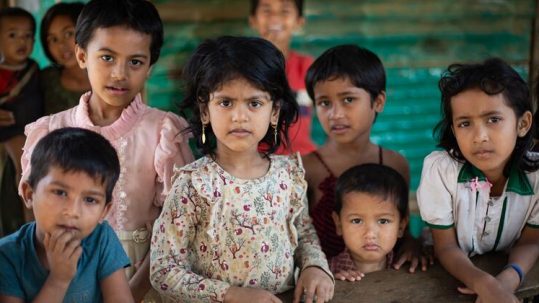
  • Deportation of Rohingya refugees began on Tuesday, according to reports. “We are concerned by these returns at a time when people sent back to Myanmar may face serious risks, and some within the group may be in need of international protection,” said UNHCR Assistant High Commissioner for Protection Edem Wosornu. No prior access Although Malaysian authorities said the process was voluntary, she noted that those returned had been held in immigration detention. “This raises serious questions about whether decisions to return were genuinely free and informed,” she said.  “UNHCR did not have access to the individuals to assess this.” The Rohingya are a mainly Muslim ethnic minority group in Myanmar, a predominantly Buddhist nation where the military and various resistance groups are locked in civil war. Myanmar’s military, which seized power in a coup in 2021, has repeatedly targeted the Rohingya community, notably in 2017, when a widely condemned military operation in Rakhine state forced several hundred thousand people to flee to other countries in Southeast Asia.  Today, more than a million Rohingya have settled in Cox’s Bazar, Bangladesh.  Safeguards and protection While UNHCR fully recognized Malaysia’s sovereign responsibility to manage asylum and migration, it urged authorities to ensure that returns are subject to robust safeguards, such as individual assessments and access to protection procedures. Decisions to return must be voluntary and assessed outside detention settings, the agency noted. Moreover, no one should be returned to a country where they may face persecution, torture or other serious threats to their life and freedom. UNHCR stressed that until conditions in Myanmar allow for safe, dignified and sustainable returns, States must continue to provide access to asylum and uphold international protection obligations. The UN agency highlighted the need for greater regional and international support towards achieving both a political solution and an end to hostilities in Myanmar. Deadly airstrike in RakhineMeanwhile, the UN's top humanitarian deplored an airstrike on a market in Rakhine state on Tuesday that killed and injured dozens of people.“Civilians must be protected,” Emergency Relief Coordinator Tom Fletcher wrote in a post on social media, stressing that "international humanitarian law must be respected.” UN Secretary-General António Guterres has strongly condemned the airstrike and called for those responsible to be held to account....

  • ...

  • Migrants’ choices about whether to change their name reflect competing pressures to fit in with the new society and maintain ties to identity, family, and cultural heritage....

  • ....

  • ....

  • The family received a one-off cash grant from the UN refugee agency (UNHCR) on crossing the border, but without a steady income and with a leg injury that limits his ability to work, Mr. Shafi now lives in a makeshift shelter in Kabul Province, its walls patched with stones and its windows covered with plastic sheets.“When there is little food, I give it to the children. If they are hungry, they cry,” he says. “We have nothing prepared for winter. If someone helps, we can manage. If no one helps, we have nothing.”Precipitous fallHis family is among nearly 8.3 million refugees and other forcibly displaced and stateless people on the brink of losing access to vital assistance as severe funding cuts push protection systems towards breaking point, UNHCR warned on Tuesday.In a new report, titled Protection Eroded: The Human Cost of Underfunding, the agency said available funding fell from $5.178 billion to $3.932 billion between 2024 and 2025. By July it had received only 32 per cent of the $8.5 billion needed this year – even as the number of people under its mandate remained at historically high levels. Below a certain threshold the system doesn’t shrink, it fails“When registration stops, safe houses close or child protection services disappear, the very risks that people fled – violence, exploitation and abuse – reappear in displacement,” said Dominique Hyde, UNHCR’s Director of External Relations. System ‘fails’In Afghanistan, where more than a million people have returned in 2026 alone, the cash grant on arrival has been cut from $375 per person to $170 per household, and reintegration grants have reached just 175 households so far this year, compared with 5,300 in 2024.In Chad, 319,000 refugees face registration delays that leave them without documentation and exposed to detention, up to 200,000 women and girls risk losing access to safe spaces, and around 233,000 children could lose child protection services.In Ethiopia, the number of safe houses for survivors of gender-based violence has more than halved in a year, from 29 to 13, while child protection coverage in some areas has fallen by as much as 85 per cent. In Sudan, more than 50,000 survivors of sexual violence in Darfur and Kordofan could lose access to life-saving post-rape care.The report warns that unlike food and shelter, protection cannot be rationed into smaller portions. “Below a certain threshold the system doesn’t shrink, it fails,” it states.  UNHCR UNHCR field officer registered refugees at a site near the border between the Democratic Republic of the Congo and South Sudan. Flexible funding ‘critical’ The refugee agency said it had cut its workforce by a third in 2025 and closed offices in 140 locations, but that even its highest priority work was now affected. The share of funding tied to specific projects has risen from 19 per cent in 2022 to 51 per cent this year. “Flexible funding helps us move the right expertise and funds to where they are needed the most,” Ms. Hyde said, adding that, protection cannot be “reduced indefinitely without systems collapsing”. UNHCR is urging donors and partners to provide urgent support and expand flexible funding to protect progress already made. ...

  • ....

  • Against this backdrop, senior UN officials on Wednesday renewed calls for a durable solution that would enable Rohingya refugees to return home safely and with dignity, while ensuring justice and accountability.UN High Commissioner for Refugees Barham Salih, a keynote speaker at a high-level event held on the sidelines of the 81st session of the General Assembly, reminded participants that nearly 1.2 million Rohingya refugees remain in Bangladesh.“An entire generation is growing up in exile…Conflicts continue in Myanmar. Conditions for voluntary, safe, and dignified, and sustainable return do not exist at the moment.”In August 2017, Myanmar's military launched a crackdown in the country's western Rakhine state, forcing hundreds of thousands of Rohingya Muslims to flee across the border into Bangladesh, where the vast majority remain refugees.Life in limboThe Secretary-General's Special Envoy on Myanmar, Julie Bishop, lamented that for children born in 2017, displacement now encompasses their entire childhood.“It's estimated that over 30,000 children are born into the camp each year.”The Myanmar envoy said women and girls living in the camps face growing risks of gender-based violence, including from armed groups and criminal networks, while access to protection services is declining.“The young are losing hope.”UN officials commended Bangladesh for its extraordinary hospitality and generosity but cautioned that the international community cannot stand by while the country continues to host the world's largest refugee settlement.“When funding disappears, needs do not disappear with it. There is less food, less education, fewer opportunities, greater pressure on health and other essential services, and more desperation for families,” the UNHCR chief said.Without prospects for a safe and dignified future, Rohingya refugees face increasing risks of exploitation, trafficking, forced conscription and dangerous sea journeys.The growing cost of displacementIn his address, Prime Minister of Bangladesh Tarique Rahman drew attention to the growing costs of prolonged displacement, both for the Rohingya and for host communities.“Prolonged uncertainty and disruption are creating new challenges and security risks, including human trafficking, migrant smuggling, drug trafficking, and other transnational crimes.”He thanked international partners for their support but stressed that generosity cannot become an excuse for political inaction.“Nor can Bangladesh be expected to shoulder this responsibility indefinitely.”“The crisis originated in Myanmar; its solution lies in Myanmar,” the Prime Minister said. © UNICEF/Mackenzie Knowles-Coursin Rohingya refugees arrive by makeshift raft from Myanmar to Noya Para, Bangladesh. Pursuing a durable solutionPresident of the General Assembly Khalilur Rahman expressed concern that familiar patterns of violence and persecution continue to cast a long shadow across Rakhine state and the rest of Myanmar.“Civilians face indiscriminate attacks, air strikes, arbitrary arrest and detention, torture, enforced disappearances, forced recruitment, destruction of homes and civilian infrastructure, and the denial of humanitarian assistance.”The Assembly President underscored the importance of sustained political attention to keep the Rohingya crisis high on the international agenda. Predictable humanitarian assistance, he said, would also remain critical.UN officials also pointed to the genocide case before the International Court of Justice (ICJ), brought by The Gambia against Myanmar, stressing that justice must be an integral part of any lasting solution and that momentum towards accountability must not be lost.Hope beyond survival“Victims deserve to see that we, as an international community, are doing our utmost to avoid a repeat of past horrors,” PGA Rahman added.Mr. Salih said refugees deserve a future that goes beyond survival.Drawing on his conversations with Rohingya refugees, he said many continue to hope for a return home, but that return must mean more than simply crossing a border.“It means returning with rights, being able to move freely, to go to school, to work, to access services, the ability to live alongside other communities without fear,” and have a pathway to citizenship.“Our responsibility is to help make that future possible,” the UNHCR chief added....

  • Amid the ongoing Israeli genocide that has destroyed entire neighbourhoods, displaced the vast majority of the population, and left Palestinians in the Gaza Strip facing a multitude of humanitarian crises, US President Donald Trump’s Board of Peace has been attempting to lay the foundation for a system that will govern the enclave for years to come. As Gaza’s future is being planned from the outside, something that should go without saying apparently needs to be said: No plan can be legitimate or sustainable without people in Gaza having a real say in the decisions that will shape their lives. For nearly three years, we in Gaza have been living among destroyed homes and worn out tents. Our families have been scattered; our friends, neighbours, and loved ones have been injured and killed; and Israeli attacks and restrictions have long since caused the collapse of the basic services needed to sustain life. The plans and promises being put forward for our future by those outside the enclave often seem entirely disconnected from this reality. Nearly a year after last October’s so-called ceasefire, they have also not been reflected in real actions. On the ground, we have yet to see any meaningful change. The Board of Peace has established a National Committee for the Administration of Gaza (NCAG). An International Stabilisation Force (ISF), consisting of soldiers from various countries, is also supposed to deploy to oversee security in the enclave. No plan can be legitimate or sustainable without people in Gaza having a real say in the decisions that will shape their lives. The NCAG is made up of Palestinians from Gaza, which seemingly sets it apart from the various redevelopment plans being proposed entirely by outsiders. People in Gaza have had no say in selecting its members, but we are clinging to hope that they can do something to improve our lives. We have been subjected to such brutality and have been made so desperate that many would be willing to welcome anyone who can ease their suffering and bring back some sense of normal life. The names and backgrounds of the NCAG’s members are less important to us. Ultimately, we will judge it based on whether it is actually able to make a difference. Something similar can be said for the ISF: If an international force means the Israeli military withdraws and people no longer have to live with the constant fear of bombing, incursions, or being displaced again, many would naturally see it as a chance for a safer life. With Israeli leaders who have overseen the devastation in Gaza, including Ben-Gvir and Katz, once again openly speaking about expelling Palestinians from the Strip, it remains to be seen whether any of the Board of Peace’s redevelopment plans will be implemented or whether the ISF will ever deploy. For now, Israel is still blocking members of the NCAG from entering Gaza and any kind of reconstruction from moving forward. But there are plenty of examples already of the disastrous results that occur when hostile and outside powers attempt to impose “solutions” on Palestinians in Gaza that serve their interests rather than those of the people who actually live here. The case of UNRWA One sign that the Board of Peace is not interested in consulting or representing the perspectives of Palestinians in Gaza in its plans for the future is the position it has taken on UNRWA, the UN’s agency for Palestine refugees. On 1 July, the Board of Peace said in a social media post that “UNRWA has no place in the new Gaza”. This isn’t merely an issue of replacing one institution with another. UNRWA is not something that is distant from our lives. The agency was established in 1949 in the aftermath of the Nakba, when hundreds of thousands of Palestinians were displaced from their homes. For more than seven decades, it has provided education, healthcare, and aid and development services to Palestinian refugees in Gaza, the West Bank, Jordan, Lebanon, and Syria. The talk of excluding UNRWA from Gaza’s future also carries greater significance than the question of who will provide these services. More than 65% of Gaza’s population are refugees registered with UNRWA who were displaced from their homes in 1948 or their descendents. For us in Gaza, UNRWA has never been just a blue logo on bags of flour. Its presence extends into the details of daily life that generations of Palestinians have known – a school children attend, a medical clinic families turn to, a lifeline refugees depend on when their options run out. We have our own criticisms of UNRWA, but critiquing an agency is very different from wanting it to disappear. The talk of excluding UNRWA from Gaza’s future also carries greater significance than the question of who will provide these services. UNRWA’s continued existence reflects the fact that the Palestinian refugee question remains unresolved, and Israel has long sought to dismantle the agency as a way of burying this question. That is why, for many of us, talk of ending UNRWA’s role or replacing the agency carries a political meaning that goes far beyond the logistics of who distributes food or runs a school. It raises questions about the fate of Palestinian refugees themselves, their rights, and how their cause might be redefined without them being genuine participants in that discussion. A dangerous precedent The Board of Peace’s vow to exclude UNRWA from Gaza’s future is not the first time Palestinians in the enclave have been presented with an alternative to an existing system without having a meaningful role in designing it. At the end of May last year, the US- and Israeli-backed Gaza Humanitarian Foundation (GHF) began distributing food through militarised distribution sites that bypassed the UN and humanitarian organisations that have worked in Gaza for decades, including UNRWA. The GHF was presented as a solution to the widespread starvation faced by Gaza’s population at the time, ignoring the fact that the same authorities offering the “solution” had created the starvation crisis to begin with. The results were sadly predictable: In just over three months, 1,172 people were killed by the Israeli military and armed security contractors in the vicinity of GHF sites, and the world’s foremost authority on hunger officially declared that a famine was taking place. These numbers aren’t just statistics in UN reports. I was one of the Palestinians forced to go to GHF sites in search of food for my starved family. I remember leaving before dawn on multiple occasions with my friend Ahmed for the distribution sites. Each time, I knew I might not come back. When I hear talk today about new systems and institutions being designed for us, I can’t see them as just administrative arrangements on paper. I have experienced what an “alternative” can mean when it is not designed around people’s safety, dignity, and needs. On one of our attempts, we ran with crowds of people towards the food amid gunfire, with Israeli tanks nearby, and snipers positioned around the area. I made it back to my family that day, but Ahmed was shot in the head and taken to the hospital in critical condition. When I returned to our tent, my family did not ask what food I had brought back. It was enough for them that I had returned alive. Ahmed survived, but he is still in a difficult condition. This is why, when I hear talk today about new systems and institutions being designed for us, I can’t see them as just administrative arrangements on paper. I have experienced what an “alternative” can mean when it is not designed around people’s safety, dignity, and needs. In Gaza, the question at the aid sites was much simpler and harsher than all the discussions about how efficient the distribution system was: Would you return to your family with food, or would you not return at all? Living with the consequences People in Gaza do not necessarily reject every new institution or every attempt to find new arrangements for governance, security, and reconstruction after the war. The need for an administration that can restore basic services, provide security, and rebuild Gaza is clearer to those living here than to anyone else. We live with the destroyed homes, lack of basic services, insecurity, and absence of reconstruction every day. For us, the needs are immediate, not just abstract questions. But the GHF experience showed why it is not enough to present Palestinians with a new system and expect us to blindly trust that the people designing it have our best interests in mind. Gaza is not an administrative problem to be solved. It is a society of more than two million Palestinians. When the meetings are over, the plans are signed, and the delegations leave, we are the ones who will remain here to live with the consequences of the decisions others are making for us. That is why a sustainable future for Gaza cannot be built through institutions and political plans designed and implemented by outsiders. If the decisions being made today will shape our lives for years and even decades to come, then the conversation must begin with the people who will live with their consequences: what we want, what we need, and what kind of future we want to build for ourselves. Gaza’s future cannot be drawn for Palestinians without them....

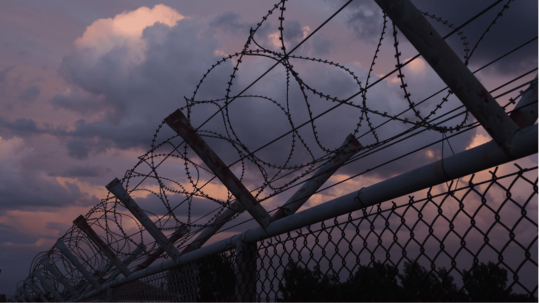
  • A Sri Lankan Tamil asylum seeker detained by the British Indian Ocean Territory (BIOT) administration for nearly five years died by apparent suicide on 13 September in Mbabane, Eswatini’s largest city, according to local news reports and relatives of the deceased. His death comes two years after the BIOT administration granted him international protection, preventing his forcible return to Sri Lanka, during which time he lived in a legal limbo in multiple countries. KP*, 36, was one of 89 Tamil asylum seekers who had fled Sri Lanka and India before being rescued by the Royal Navy in October 2021 when their fishing vessel faltered near the British-held island of Diego Garcia, which lies within BIOT. Hundreds of additional arrivals followed on later vessels, most of whom agreed to return to Sri Lanka or left by boat to Mauritius or the French island of Réunion. Around 60 remained in BIOT custody, living in a fenced tent camp in Diego Garcia’s tightly controlled UK-US military facility. They faced rat infestations, deteriorating psychological and medical conditions, and the threat of being prosecuted or shot if they violated strict movement restrictions. Most were approved to enter the UK in November 2024. The following month, the BIOT Supreme Court ruled their detention on the island had been unlawful. But KP was one of three members of the group denied entry to the UK because they had been convicted of crimes or were under criminal investigation during their detention. Another is serving the remainder of a three-year prison sentence in Montserrat for sexual offences against a child; and the whereabouts of the third person have not been publicly disclosed. KP’s case, according to analysis by the London-based GSC Solicitors, “underscores the complexities of balancing humanitarian considerations with public safety concerns”. His transfer to Eswatini and subsequent death raise further questions about how the UK government decided to address these complexities, particularly since his suicidality was known to UK authorities for years. Local media in Eswatini have reported that his transfer to the country was permanent. If confirmed, it would appear to be the first publicly documented instance of an asylum seeker being granted international protection by a British authority before being permanently resettled in a different country. The closest precedent was a 2022 plan to send asylum seekers from the UK to Rwanda for processing and potential resettlement. This faced legal challenges and was scrapped in 2024 before transfers began. Three asylum seekers sent from Diego Garcia to Rwanda in 2023 for medical treatment said they were harassed or threatened there, including by a hospital worker. The New Humanitarian spoke by phone on 15 September to KP’s relatives in India, which hosts a large, effectively stateless Sri Lankan Tamil population. His mother said he was transferred from Diego Garcia to the Maldives six months ago because of the US-Iran war. A month later, she said, he was brought to Eswatini, where he received two successive three-month visas, the second of which was due to expire on 20 September.  Swaziland News reported in July that an agreement between the UK and Eswatini governments allowed KP to stay in the country permanently. “At the end of the period of up to three years, the UK will no longer cover any costs of the continued presence of the Relocated Migrant in Eswatini. The Relocated Migrant is expected to be self-sustaining as a member of Eswatini society,” reads an excerpt of the agreement, according to the local outlet. An Eswatini lawmaker criticised the country’s prime minister for turning the country into a “dumping ground” by admitting a “delinquent” from Sri Lanka. On 15 September, the Times of Eswatini reported that a Sri Lankan national “was found hanging from the rafters at a guest house” the previous weekend, prompting a police investigation. The New Humanitarian approached the UK’s Foreign, Commonwealth and Development Office and the BIOT administration for clarification on KP’s status in Eswatini and the circumstances surrounding his death. “We are working with the Eswatini local authorities at this time. It would be inappropriate to comment further at this stage," a government spokesperson responded by email*. A lawyer from Duncan Lewis Solicitors, which represented KP in legal challenges to the UK and BIOT governments, said they were not authorised to comment. KP had been “tortured, sexually assaulted and abused” by Sri Lankan military personnel before fleeing to India in 2007. He was one of eight members of the Diego Garcia group to be granted international protection on the basis of individual assessments, some on similar grounds. But he was barred from entering the UK with the rest of the group because of a series of criminal convictions: sexually assaulting another asylum seeker four times, assaulting and harming a security officer who tried to intervene in his suicide attempt, and arson “in connection with an attempted suicide by self-immolation”. “Whilst we understand the need to separate him from the community, his right to privacy and to be accommodated in a humane and dignified manner must be upheld.”  In response to his behaviour and unravelling mental state, BIOT authorities kept him separate from the rest of the asylum seeker group. He was confined for around eight months in a laundry room with only supervised access to other areas of the compound and two weeks alone in a police cell with no natural light. Following a late 2023 monitoring visit, UNHCR, the UN’s refugee agency, said it was “deeply concerned” by the conditions of his detention, citing his sleeping area’s exposure to noise, shower leaks, and toilet smells. “Whilst we understand the need to separate him from the community, his right to privacy and to be accommodated in a humane and dignified manner must be upheld,” the monitoring team said in a 2024 report. Throughout his detention, he attempted suicide numerous times, sometimes in quick succession, prompting medical evacuation to Bahrain in 2024, according to court records.  The New Humanitarian spoke briefly with KP following his return to Diego Garcia from medical treatment in Rwanda in 2023. In broken English, he described receiving “not correct treatment”, “no sleeping”, and being confined to a “military area”. Another asylum seeker recalled witnessing him “walking alone”, “seeing dreams”, “screaming at night”, and threatening to harm himself with a shard of a broken mirror. A psychiatrist quoted in 2024 court proceedings said “it is very difficult for him to be so isolated for an indefinite period”, and ending his isolation “would hugely improve his mental health”. In 2025, a UK court dismissed KP’s legal challenge to being barred from the country, allowing the government to base its decision on public safety concerns. With return to Sri Lanka ruled out and the UK refusing him admission, his only remaining solution was relocation to a third country. His mother told The New Humanitarian he sounded depressed when they spoke on 13 September, the same day his body was found. She had asked him to come back to India. Seemingly unaware or disbelieving his stay in Eswatini was permanent, he told his mother he was planning on waiting there for a few days before being sent to a third country. (*KP's real name was replaced by initials the day after publication as TNH was made aware of a court order insisting on anonymity. The story was also updated to include the FCDO response, which came on 16 September.) If you are in crisis, click here to find a helpline near you (via the International Association for Suicide Prevention). Edited by Andrew Gully....

  • Some 125,000 people have been forced from their homes across Yemen in the past two weeks as a major new escalation linked to both the US-Iran conflict and Yemen’s own nearly 12-year war deepens hardship for millions already struggling to survive. Hafedhaa Murshed had spent more than five years in a displacement site in western Taiz province before clashes broke out on 3 September near the site where she, her husband, and their seven children were staying. As the fighting drew nearer, the family grabbed their most valuable and lightest possessions. “We walked nearly three kilometres on foot,” Murshed told The New Humanitarian, speaking from the makeshift camp elsewhere in Taiz where they are now staying. “There were no vehicles to transport our belongings, so we arrived here with only a few kitchen utensils and a blanket.” Taiz has long been a flashpoint of Yemen’s war. Fighting, sieges, and restrictions on aid and trade access have been hallmarks of life in the southwestern province for years. Houthi rebels and a coalition of fighters allied with the internationally recognised government have been fighting since early 2015, and Taiz lies between territory currently controlled by the Houthis and the Saudi-backed government. A 2022 truce had ushered in a period of relative calm, but the Houthis (officially called Ansar Allah) launched an offensive on multiple fronts in early September, part of their bid to control the strategically important Bab al-Mandeb strait. Saudi Arabia has hit back with airstrikes and the United States has reportedly sent advisers to aid the kingdom’s military efforts, raising fears of a return to all-out war. Controlling the strait allows the Houthis – who have ties to Iran – to further block Saudi Arabia from exporting oil via the Red Sea (the kingdom has been using the strait to export oil since Iran effectively closed the Strait of Hormuz). It is also part of the longstanding stated goal of the Houthis to take the Red Sea coast from Saudi-backed fighters. While the reasons behind the new offensive are murky and complex, the impact on Yemen’s most vulnerable civilians – among them more than 5.2 million who were already displaced before this uptick in fighting – have been clear and direct. Like many others, Murshed was already dealing with extreme poverty before her latest displacement. But she had been staying with another displaced relative, who at least shared their mattresses and blankets. The UN reports that 125,000 people have been newly displaced in just two weeks and the numbers are rising quickly – including tens of thousands in Taiz alone. Entire communities are being forced from their homes, and some are now fleeing the country altogether, with the UN’s migration agency reporting that 2,000 people have reached Djibouti's northern shores. With the response to Yemen’s humanitarian crisis already chronically underfunded, and now compounded by the economic impacts of the US-Iran war, people like Murshed are finding themselves trapped in an endless cycle of displacement, with little to no assistance. “Our life wasn’t perfect, but at least we had a safe camp,” Murshed said of life at the previous site, which was already her family’s second displacement. “The fighting has forced us to flee again, and to begin the suffering of displacement and starting from scratch again.” Fuel prices and day wages Long before Murshed and her family were forced to leave their camp, Yemen’s economic crisis was already battering people like her far from the front lines. “Even before we fled last week, we lacked many of the basics because work opportunities were scarcer than before. Men would leave in the morning looking for work and return by midday empty-handed,” Murshed explained. The growing regional fallout from the Iran-US conflict triggered a sharp surge in fuel prices across government-controlled areas in Yemen. A 20-litre container of diesel has jumped from 25,000 YER ($17) in May – several months after the war began – to 45,000 YER ($30) today. A source at the Yemeni Petroleum Company in Aden told Reuters in May that the rise in fuel prices – even back then – was the result of a supply crisis and rising global fuel prices driven by the regional conflict and the closure of the Strait of Hormuz. That surge has had a cascading effect since, driving up the cost of goods and services that are dependent on fuel and transportation – including construction materials – hitting day labourers first. The only jobs that many displaced men like Murshed’s husband can get now are day-by-day jobs on construction sites or loading and unloading building supplies at local shops. “I don’t remember a time in my life when we ate only bread and tea for breakfast and dinner like we do now. We buy just enough food to stay alive because our income doesn't allow for more, and we can't afford the food we actually want.” Murad Thabet, a construction worker in his 50s who has worked in the industry across various parts of Yemen, described the current crisis as “the worst in his life”. “I have been working for around 40 years, but these days are the worst,” he told The New Humanitarian. “The price of building materials is rising dramatically, so many contractors and property owners have halted work until things stabilise.” Thabet, who is displaced from his village in the southwest of the province and rents a home in Taiz city for his wife and three children, said many day labourers are struggling to provide their families with basic necessities. “I don’t remember a time in my life when we ate only bread and tea for breakfast and dinner like we do now,” he added. “We buy just enough food to stay alive because our income doesn't allow for more, and we can't afford the food we actually want.” Thabet stressed that his main problem is the lack of job opportunities rather than the cost of food itself. This has long been the case in Yemen, where economic collapse as a result of their own 12-year war has been a major driver of hunger. US-funded food insecurity monitor FEWS NET has consistently said that displaced people and those without income are of greatest concern across a country where 15-16 million people are expected to need food aid through September – not taking into account this month’s developments. “If we have an income, we can buy food even if prices rise a bit,” said Thabet. “But when we have no work, as is the case now, we cannot afford food even if it is cheap.” Competition and sacrifice Thabet said he is among many men who wait at the same spot in Taiz every morning looking for work. Most leave disappointed. “When someone arrives looking for one labourer, around 10 people run after him and accept any wage because they desperately need work,” he said. Abdullah Mohammed, a displaced father of three in his late 30s, recently lost his job as a construction worker and guard at a building site in Taiz. Before the building’s owner suspended construction in May and dismissed all the workers, it was enough for Mohammed to rent a home and take care of his family. “The building owner told us he would resume construction when things calm down and prices drop, but it seems he won’t anytime soon because things are getting worse and prices keep going up,” Mohammed told The New Humanitarian. He has now taken his oldest child out of school, bringing the 12-year-old boy along with him to collect empty plastic bottles they can sell for a small amount of money. “Education isn’t our priority right now – having enough food is,” Mohammed said. “Once we have enough food on the table and I have a steady source of income, I will send my children back to school and provide them with everything they need, even the toys I used to buy them every month.” An August Save the Children survey found that nearly one in five cases of school dropouts in Yemen were due to child labour, with kids sent to work to help their families survive. Taiz is the only government-controlled province in Yemen that completely lacks public electricity; the main power station was destroyed at the start of the war and has never been fixed. People buy electricity from private commercial generators, but the sharp surge in fuel prices has driven up costs from 1,100 YER ($0.70) per kWh in February to 1,500 YER ($1.00). Sami Mohammed, a 47-year-old father of four, works as a government employee, earning a monthly salary of around $100. That’s just enough to feed his family, but electricity is now out of reach. “I connected my home to electricity about three years ago when it cost around 400 Yemeni riyals ($0.25) per kWh, but at current prices I would have to spend half my salary on electricity alone,” Mohammed told The New Humanitarian. “This recent increase was caused by the regional conflict and its impact on fuel supplies. We hope things improve, but until then I have disconnected my home from the grid because I simply can’t afford it.” Sami is among many residents who now rely on small car batteries running off solar panels to provide some light in his house – this method is also used by displaced people in camps. While the batteries can provide a bit of light, they aren’t strong enough to run household appliances like refrigerators. The hardest-hit groups Fawzi al-Habashi, director of the Better Life Association, a Taiz-based aid group, told The New Humanitarian that vulnerable groups — such as displaced families and the Muhammasheen — are desperately in need of more assistance. The Muhammasheen, which means “the marginalised ones”, are a minority group in Yemen who some believe are descended from African slaves or soldiers. They have long been discriminated against, and most live in slums and extreme poverty. “In the recent escalation, we saw many displaced families fleeing their homes for the second or third time. As they fled and arrived at existing displacement camps, it placed immense pressure on the host communities,” al-Habashi said, noting that there was often not enough water for new arrivals. “All Yemenis have been impacted by the recent increase in fuel and food prices, but vulnerable communities – such as displaced people and those who lost their jobs – are the most affected because they lack a source of income to help them survive the crisis.” Aid groups are doing what they can under severe budget constraints, but shrinking funds are severely hindering the response, he said, adding that it was important to keep in mind that humanitarian needs didn’t just start with the recent wave of displacement or the US-Iran war. “All Yemenis have been impacted by the recent increase in fuel and food prices, but vulnerable communities – such as displaced people and those who lost their jobs – are the most affected because they lack a source of income to help them survive the crisis,” al-Habashi said. He called on the international community to increase support for Yemen so that groups like his can help more people: “Displaced families and other vulnerable people are being hit twice, first by the economic crisis, and now by the recent escalation, so the international community must not forget them.” Murshed, newly displaced in Taiz, also appealed to international organisations for help, but she spoke too of the solidarity she has seen among other Yemenis who are sharing what little they have with those most in need. “We sleep under the same small, overcrowded tent with another family because we have no alternative. Water is scarce, and food depends on whether others have enough to share with us,” she said. “The displaced families in this camp understand our suffering and do not hesitate to help us… but they are in dire need too, so we are all sharing the burden.” Edited by Annie Slemrod. ...

  • Ce site utilise Anubis, un outil qui filtre les robots nuisibles.Nous vérifions actuellement que vous n’êtes pas un robot. En cas de problème, contactez-nous à contact(at)openedition.org This site uses Anubis, a tool which filters out harmful bots.We’re currently verifying that you’re not a robot. If you encounter a problem, please contact us at contact(at)openedition.org...

  • Ce site utilise Anubis, un outil qui filtre les robots nuisibles.Nous vérifions actuellement que vous n’êtes pas un robot. En cas de problème, contactez-nous à contact(at)openedition.org This site uses Anubis, a tool which filters out harmful bots.We’re currently verifying that you’re not a robot. If you encounter a problem, please contact us at contact(at)openedition.org...

  • Ce site utilise Anubis, un outil qui filtre les robots nuisibles.Nous vérifions actuellement que vous n’êtes pas un robot. En cas de problème, contactez-nous à contact(at)openedition.org This site uses Anubis, a tool which filters out harmful bots.We’re currently verifying that you’re not a robot. If you encounter a problem, please contact us at contact(at)openedition.org...

  • Ce site utilise Anubis, un outil qui filtre les robots nuisibles.Nous vérifions actuellement que vous n’êtes pas un robot. En cas de problème, contactez-nous à contact(at)openedition.org This site uses Anubis, a tool which filters out harmful bots.We’re currently verifying that you’re not a robot. If you encounter a problem, please contact us at contact(at)openedition.org...

  • Ce site utilise Anubis, un outil qui filtre les robots nuisibles.Nous vérifions actuellement que vous n’êtes pas un robot. En cas de problème, contactez-nous à contact(at)openedition.org This site uses Anubis, a tool which filters out harmful bots.We’re currently verifying that you’re not a robot. If you encounter a problem, please contact us at contact(at)openedition.org...

  • The Moria refugee camp on the Greek island Lesvos became a symbol of Europe’s containment policies and inhumane treatment of asylum seekers from the Middle East and Africa. Before the camp burned to the ground in September 2020, it was infamous for its appalling living......